
The President’s Address as a Guiding Framework for the Country’s Development: Meeting with Students Held at the University
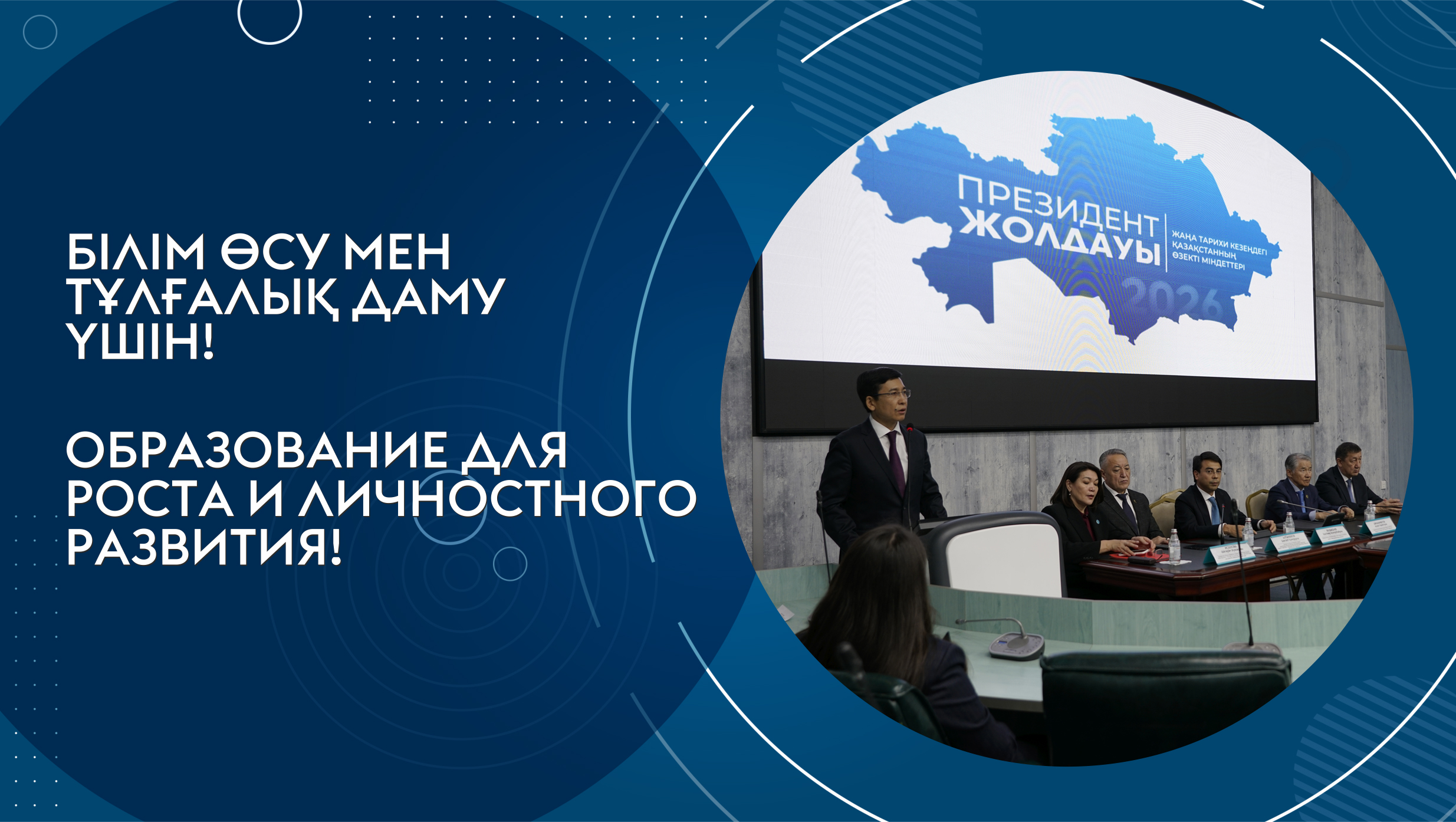
Karaganda University of Kazpotrebsoyuz hosted a meeting bringing together members of the Kurultai, representatives of government bodies, the Kazakhstan People's Council and civil society, as well as the University's students and academic staff. The central topic of the meeting was the Address of the President of the Republic of Kazakhstan, Kassym-Jomart Tokayev, and the priorities for the country's further development outlined in it.
The meeting served as a platform for discussing current socio-political issues, the strategic directions of public policy and the challenges facing Kazakhstan at its new stage of development. Particular attention was given to the Address as a document defining the key areas of forthcoming reforms and setting out the country's development priorities.
The participation of representatives of the Kurultai, government bodies, the Kazakhstan People's Council and civil society brought together different perspectives and highlighted the importance of cooperation between state institutions, civil society and the younger generation.
Students and academic staff actively participated in the meeting. For young people, this format of engagement provides an opportunity to take part directly in discussions concerning the present and future of the country, learn more about the work of public and government institutions, and reflect on their own role in social processes.
Such meetings are particularly important in the university environment, where the professional competencies, civic responsibility and active social engagement of future specialists are developed. Involving young people in public dialogue helps foster civic participation, strengthen their interest in the changes taking place in the country and encourage an understanding of every citizen's responsibility for Kazakhstan's future.
Events of this kind reaffirm the University's role not only as an educational and research institution, but also as a platform for meaningful public dialogue, the exchange of views and intergenerational cooperation.
 |
 |
 |
 |
 |
 |